
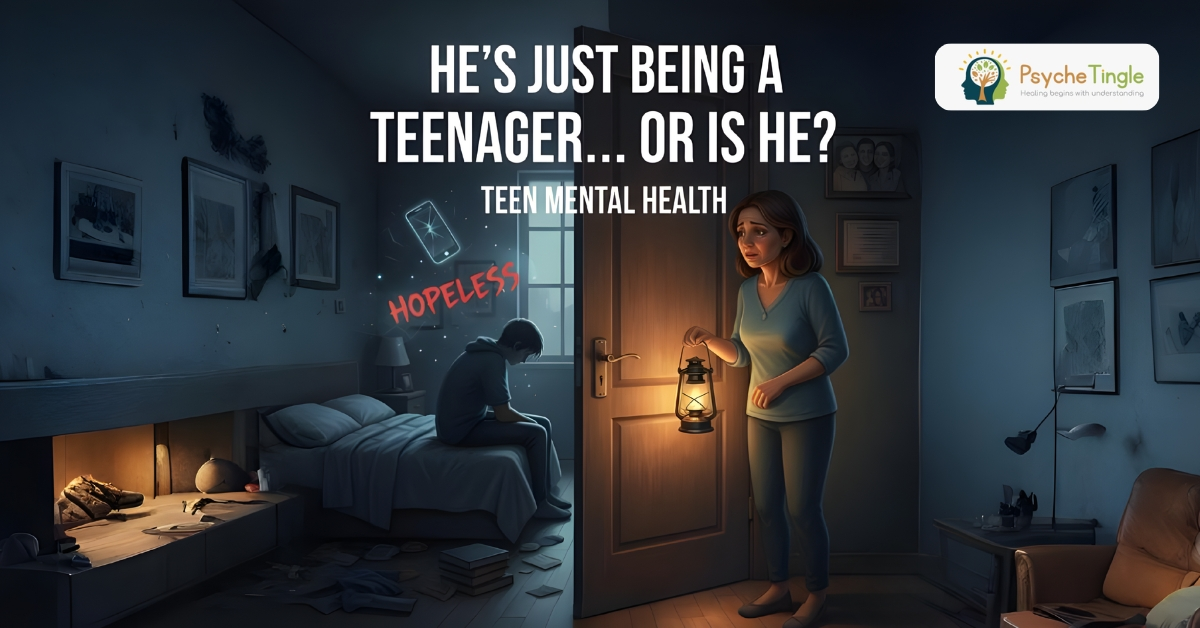


As a parent, the teenage years can feel like walking through a minefield.
One minute your child is laughing.
The next, a slammed door shakes the house.
You tell yourself, “It’s just hormones. It’s just a phase.”
And often-you’re right.
Adolescence is a stormy period of brain development, emotional growth, and identity seeking. Mood swings, irritability, and pushing boundaries are part of the process.
But sometimes, the storm signals something deeper.
When Normal Becomes Concerning
At Psyche Tingle, we help parents understand the difference between typical teenage behavior and signs that may need professional attention.
The key indicators are duration and disruption.
What’s Normal vs. What’s a Concern
Normal:
Feeling sad or upset for a few days after:
- A bad exam result
- A friendship conflict
- A breakup
Concern:
Feeling withdrawn, irritable, or hopeless most days for more than two weeks.
Normal:
Wanting more privacy and spending extra time alone in their room.
Concern:
- Complete isolation
- Cutting off friends they once enjoyed
- Sudden changes in hygiene, sleep, or eating patterns
The Biggest Red Flag to Watch For
If their behavior begins to interfere with daily functioning, it’s time to pause and look closer.
Warning signs include:
- Avoiding or refusing school
- Persistent sleep problems
- Constant agitation or anxiety
- Loss of interest in everything they once enjoyed
This isn’t “attitude.”
It’s communication-just not in words.
What This Means for Parents
Recognizing a mental health concern is not a failure of parenting.
It doesn’t mean you missed something.
It doesn’t mean you did something wrong.
It means you’re paying attention.
Early support can:
- Prevent long-term struggles
- Help teens build emotional skills
- Restore confidence and routine
Final Thoughts: Listening Beyond the Door Slam
Teenagers don’t always ask for help directly.
Sometimes, they show it through silence.
Through withdrawal.
Through behavior that feels confusing or frustrating.
Seeing the signs-and responding with care-is one of the strongest things a parent can do.
Support doesn’t label your child.
It helps them find their way back.